
 English
 简体中文
 繁体中文


How to Repair Scratches on Aluminum Gates?
How to Repair Scratches on Aluminum Gates?
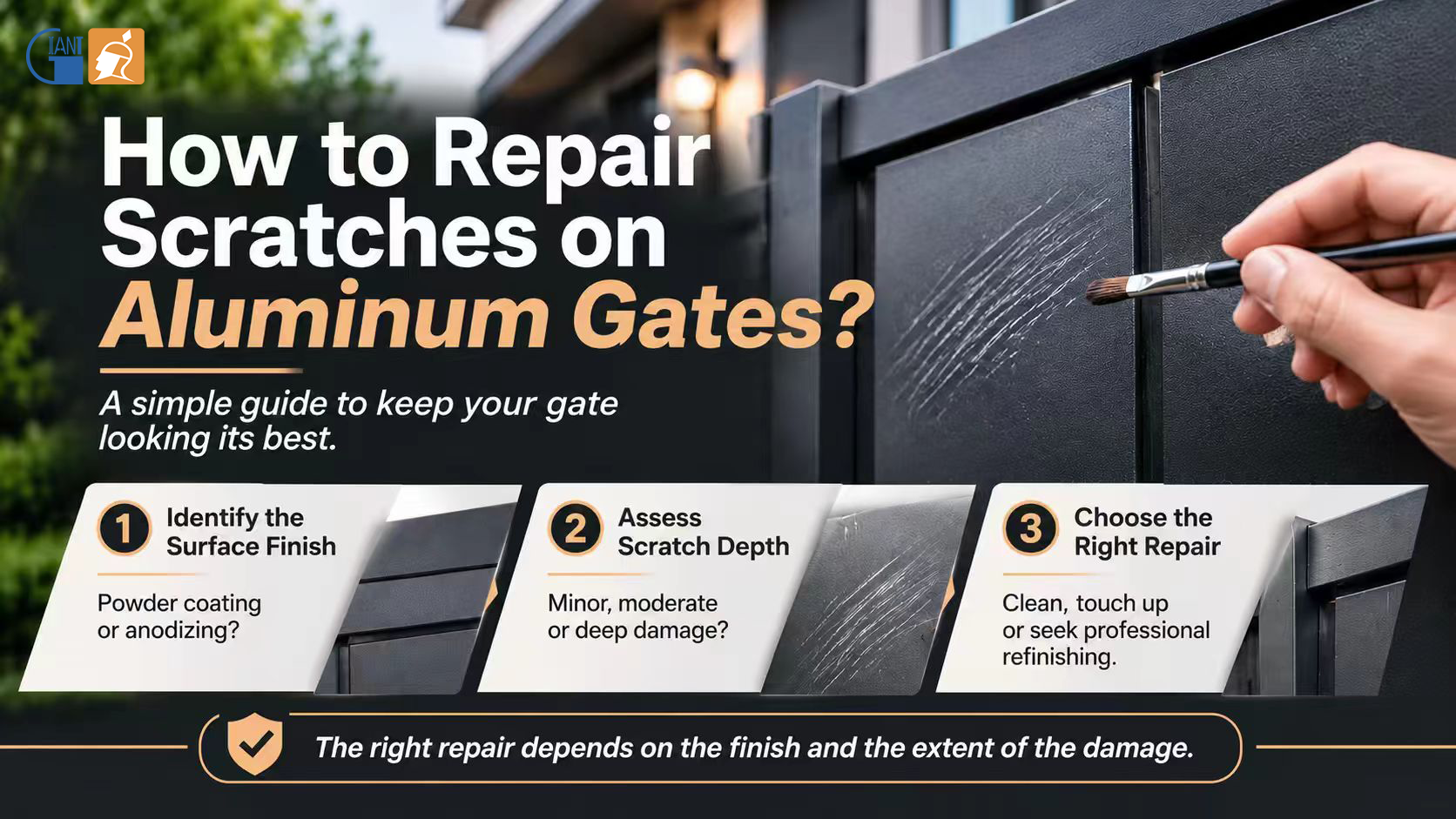
Scratches are almost inevitable with regular use of aluminum gates. Daily operation, accidental impacts, moving equipment, and flying debris can all leave marks on the surface. While minor scratches mainly affect appearance, deeper damage may expose the aluminum substrate and compromise the protective finish. However, not every scratch requires the same repair method. The right approach depends on the surface treatment and the extent of the damage.
1. Identify the Surface Finish Before Repairing
Two common finishes used on aluminum doors are powder coating and anodizing, and each requires a different repair approach.
Powder-coated aluminum gates feature a durable surface coating that allows localized repairs. Minor scratches may be reduced with suitable polishing products, while deeper marks that expose the metal can be treated with compatible, color-matched touch-up paint.
Anodized aluminum gates have an oxide layer formed through an electrochemical process rather than a conventional paint coating. Once deeply scratched, the original color and metallic appearance are difficult to restore locally. Minor marks may be improved through gentle cleaning, but deeper damage may require professional refinishing or component replacement.
Before applying any repair product, test it on a small, inconspicuous area to avoid unwanted changes in color or gloss.
2. Choose the Right Repair Method Based on Scratch Depth
Minor Scratches: Surface Finish Intact
If the scratch has not exposed the aluminum, clean the area with mild detergent and a soft cloth. For powder-coated surfaces, apply a compatible touch-up product in thin layers, following the manufacturer's instructions. Avoid aggressive polishing on anodized finishes, as it may create uneven gloss or discoloration.
Moderate Scratches: Bare Aluminum Exposed
When the coating is damaged, protecting the exposed aluminum becomes the priority. Clean and dry the area, remove loose coating, and prepare the surface as directed by the repair product manufacturer. Apply an aluminum-compatible primer where required, followed by a color-matched topcoat suitable for outdoor exposure.
Deep Scratches, Dents, or Extensive Damage
Deep gouges, dents, or large areas of coating damage may require professional refinishing or replacement. Fillers and repainting can improve the appearance, but matching the original factory finish across a large area is difficult. In these cases, replacing the damaged section may be more practical.
3. Why Modular DIY Aluminum Gates Make Replacement Easier
When repairs become impractical, a gate designed for individual component replacement offers another solution.
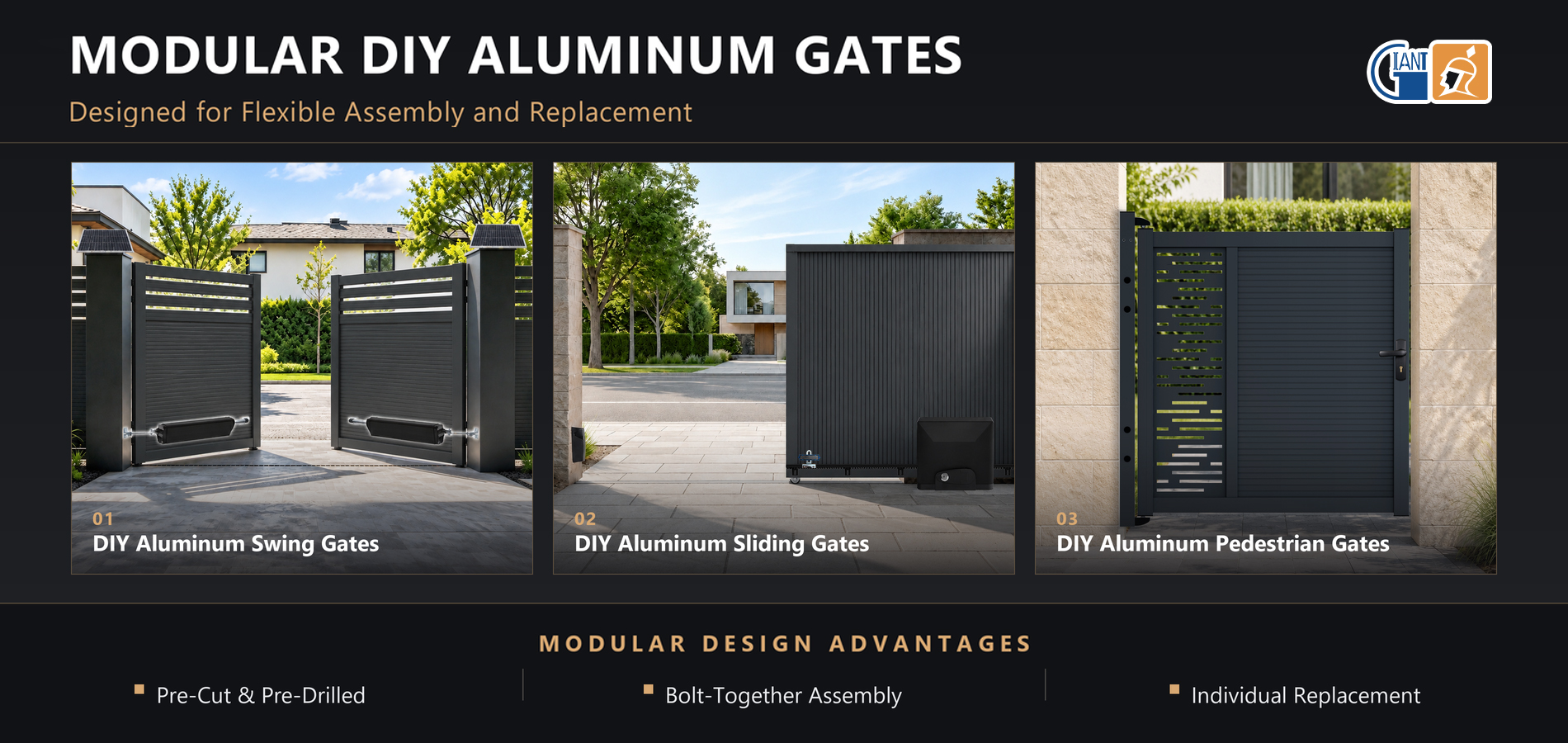
JUJIANG GIANT DIY aluminum gates feature a modular structure with pre-cut and pre-drilled posts, frames, and fence panels. These components are assembled with bolts, reducing the need for on-site welding or extensive cutting.
If a panel or gate section suffers serious damage, the affected component can be replaced individually without necessarily dismantling the entire gate.
The product range includes DIY aluminum swing gates, sliding gates, and pedestrian gates, suitable for residential driveways, garden entrances, and side access points.
Compatible automation solutions are also available. Sliding gates can be paired with the PYM-B310H brushless sliding gate motor, while swing gates can work with the PKM-C061 swing gate operator, which features built-in lithium battery storage and solar charging support.
Conclusion
Repairing aluminum gate scratches requires considering both the surface finish and the severity of the damage. Minor marks may need simple touch-ups, while exposed aluminum requires proper protection. For extensive damage, component replacement may be the more practical choice. With a modular DIY aluminum gate system, maintenance can be more flexible without necessarily replacing the entire gate.
 37 Sunshine Road, Photoelectric Information Industrial Park, Nan'an, Fujian, China
© Copyright: 2022 Giant Alarm System Co.,Ltd All Rights Reserved.

IPv6 network supported


