
 English
 简体中文
 繁体中文


What Should You Assess Before Installing an Outdoor Automatic Boom Barrier?
What Should You Assess Before Installing an Outdoor Automatic Boom Barrier?
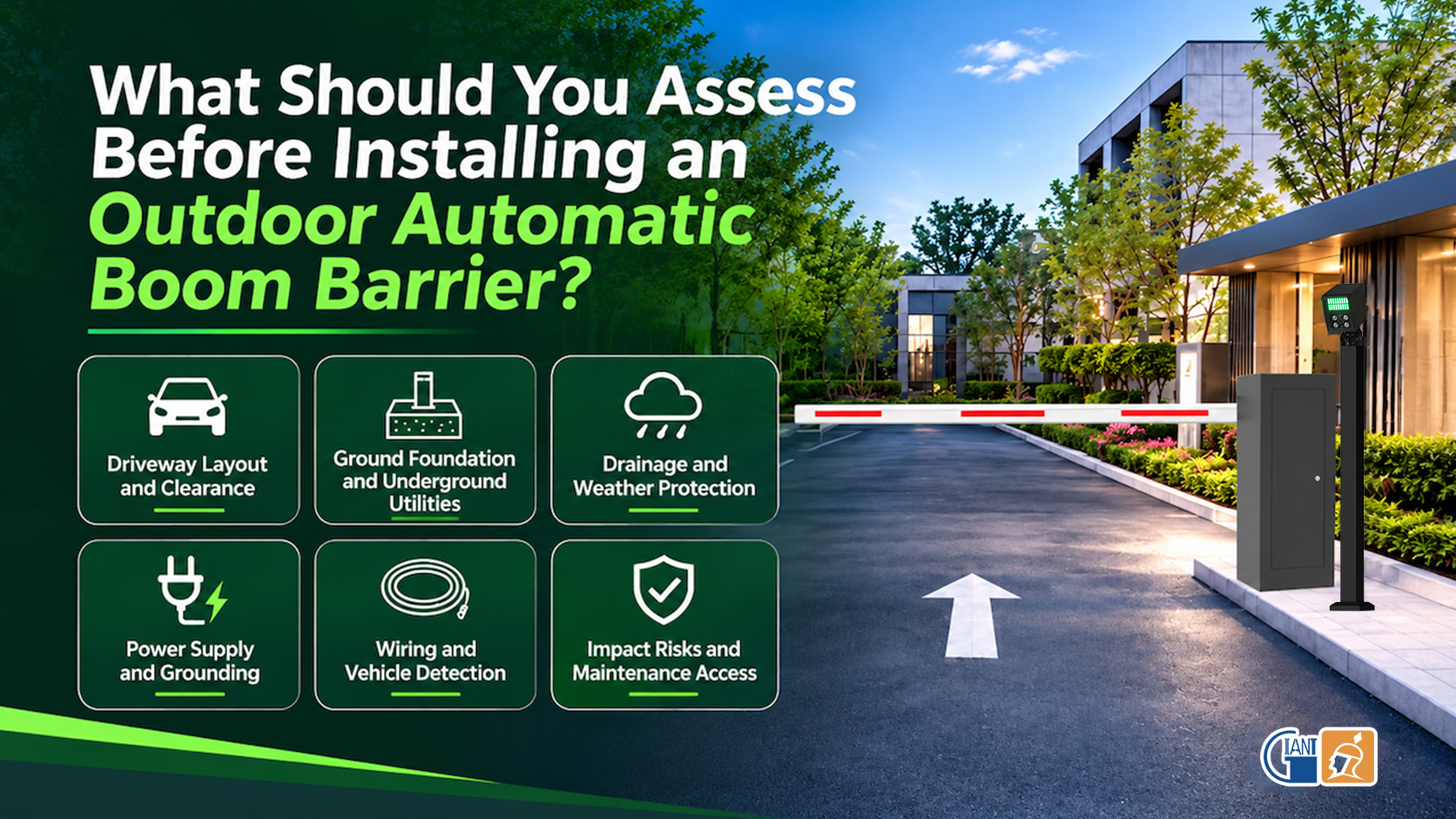
The reliability of an automatic boom barrier largely depends on site conditions before installation. Ground stability, drainage, power supply, weather exposure, and vehicle access all affect long-term performance. A proper outdoor boom barrier site assessment helps prevent installation difficulties and operational problems.
1. Driveway Layout and Clearance
Check driveway width, vehicle types, and traffic volume to determine whether a straight or folding arm is suitable. The boom barrier arm length must provide sufficient clearance, with no overhead cables, canopies, or nearby structures obstructing its movement.
Allow enough space for cabinet maintenance. For license plate recognition (LPR) systems, a relatively straight vehicle approach helps improve camera positioning. Also consider driveway gradients, vehicle queues, pedestrian movement, and emergency access.
2. Ground Foundation and Underground Utilities
Different surfaces require different boom barrier foundation solutions. Asphalt generally requires an independent concrete foundation rather than direct equipment mounting. Soft soil and backfilled areas may need compaction or reinforcement to prevent settlement.
Ensure the mounting surface is level. Before excavation, identify underground water pipes, gas lines, electrical cables, and communication conduits. Avoid installing induction loops near dense underground utilities or metal covers.
3. Drainage and Weather Protection
Position the equipment where rainwater can drain away freely. For flood-prone locations, consider raised foundations and sealed cable entries.
Coastal salt exposure, strong winds, freezing temperatures, and prolonged sunlight should also influence equipment selection. The appropriate IP rating for outdoor boom barriers depends on actual environmental conditions and manufacturer recommendations.
4. Power Supply and Grounding
A dedicated power circuit is preferable to sharing electricity with high-load equipment. For long cable runs, check voltage drop and supply stability.
Ground metal cabinets and electrical installations according to local regulations. In storm-prone areas, consider surge protection. Critical entrances may also require manual release or backup power.
5. Wiring and Vehicle Detection
Separate power and signal cables to reduce interference, and protect outdoor wiring with suitable conduits and waterproof connections.
Induction loop detectors require suitable pavement for installation. Where road conditions are unsuitable, radar detection may provide an alternative. Wired network connections are generally preferred for reliability, while fiber may be needed over longer distances. Position LPR cameras away from direct sunlight and visual obstructions.
6. Impact Risks and Maintenance Access
Entrances near public roads or frequently used by heavy vehicles may require protective bollards or traffic islands. Also check local approval requirements, maintenance access, and compatibility with existing access control systems.
Choosing the Right JUJIANG GIANT Boom Barrier
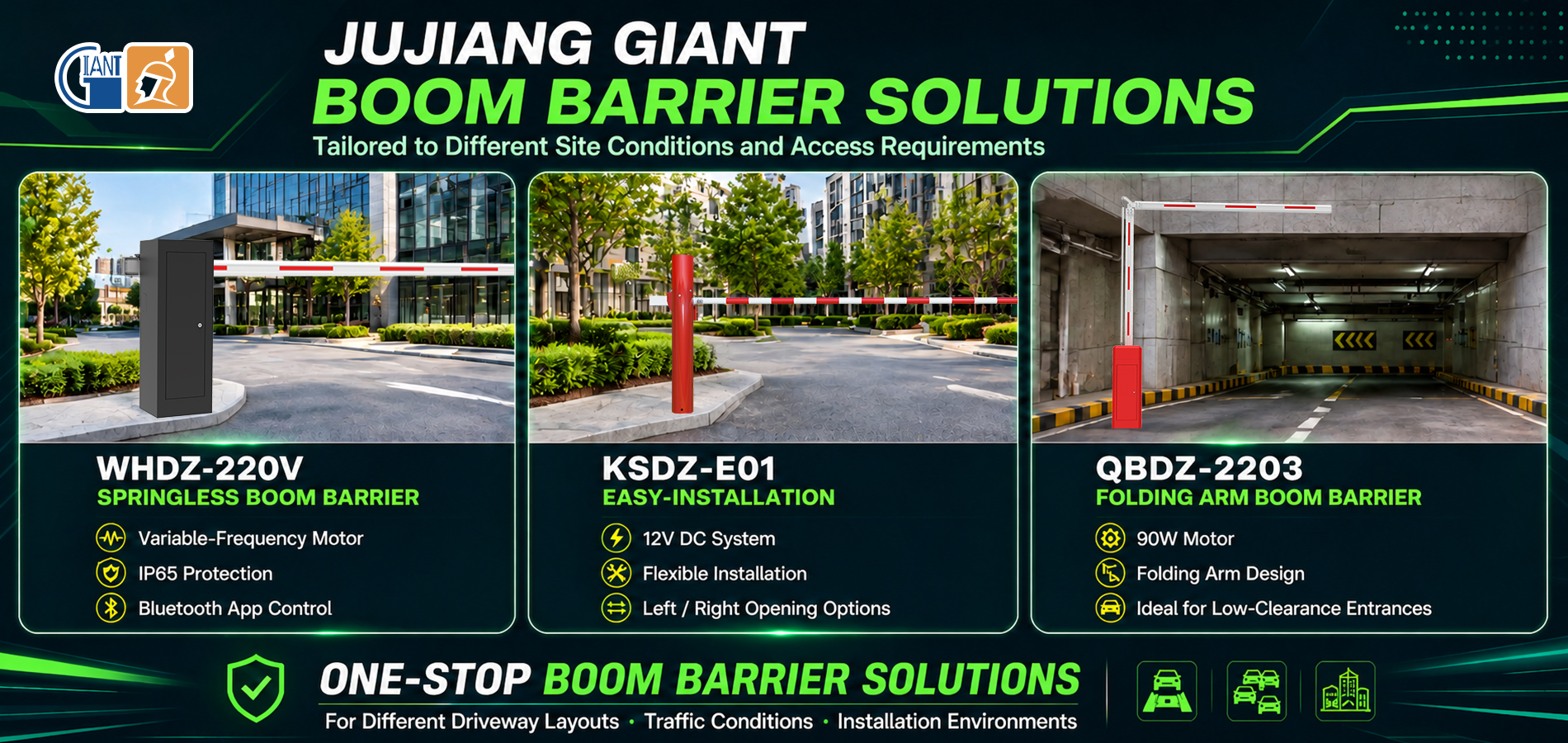
After evaluating site conditions, select equipment according to actual project requirements.
WHDZ-220V Springless Boom Barrier: Its variable-frequency motor and springless mechanism suit wider driveways and frequent traffic. IP65 protection, Bluetooth app control, and fault diagnosis support convenient operation and maintenance.
KSDZ-E01 Easy-Installation Boom Barrier: Designed for medium and relatively narrow driveways, this 12V DC system supports surface mounting, manual release, reversible opening direction, and angle adjustment.
QBDZ-2203 Folding Arm Boom Barrier: Its folding arm design suits underground parking facilities and covered entrances with limited overhead clearance. The 90W motor make it suitable for residential and institutional environments.
A successful automatic boom barrier installation starts with proper site assessment. Evaluating foundations, drainage, power supply, detection conditions, and operating clearance helps reduce installation risks and ensures more suitable equipment selection. JUJIANG GIANT offers springless, easy-installation, and folding-arm boom barrier solutions for different outdoor access control requirements.
 37 Sunshine Road, Photoelectric Information Industrial Park, Nan'an, Fujian, China
© Copyright: 2022 Giant Alarm System Co.,Ltd All Rights Reserved.

IPv6 network supported


