
 English
 简体中文
 繁体中文


How to Plan the Right Location for a Boom Barrier: A Practical Installation Guide
How to Plan the Right Location for a Boom Barrier: A Practical Installation Guide
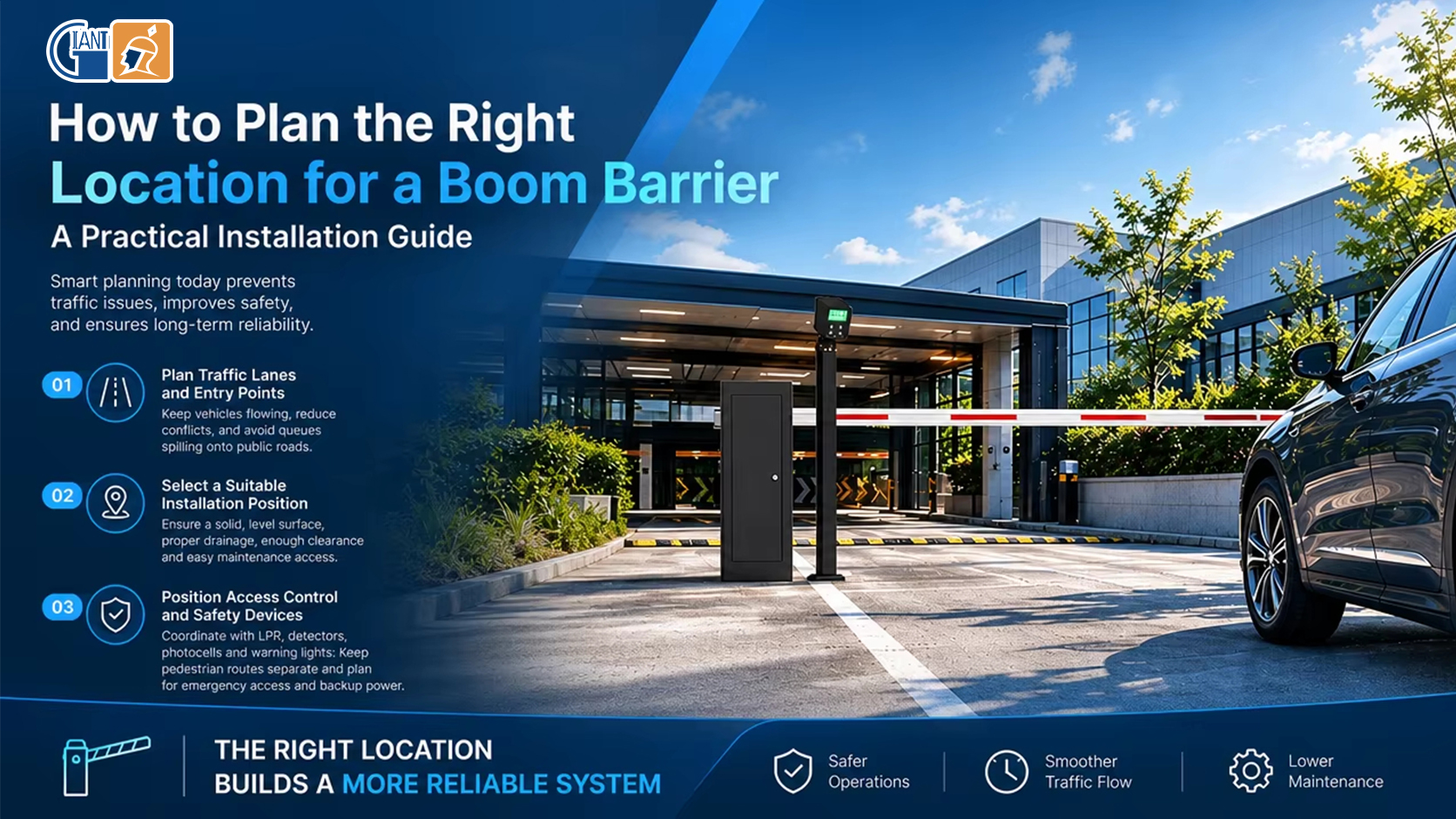
As commercial parking facilities, industrial parks, logistics centers, and residential developments adopt automated access control, proper boom barrier installation becomes essential to traffic flow, operational reliability, and vehicle safety. Poor placement can cause license plate recognition failures, vehicle queues, boom collisions, and maintenance issues. Careful site planning helps prevent these problems before installation begins.
1. Key Considerations for Boom Barrier Placement
Plan Traffic Lanes and Entry Points
Where space allows, provide separate entry and exit lanes to reduce traffic conflicts. A single reversible lane may suit smaller sites with limited space, provided that traffic controls are properly designed. Lane width should accommodate the largest expected vehicle, including delivery trucks and emergency vehicles where applicable. Assess peak-hour traffic and ensure queues remain within the site rather than extending onto public roads.
Select a Suitable Installation Position
Install the automatic boom barrier on a firm, level surface with adequate drainage. Avoid sharp bends, steep gradients, and locations where standing water or heavy vehicle loads could affect the foundation. For underground parking entrances, position the barrier where drivers have sufficient visibility and stopping distance, taking the ramp layout into account.
Allow sufficient clearance for the boom's full movement and reserve accessible space around the cabinet for maintenance. A properly designed concrete foundation or equipment island can protect the installation and organize cabling. Check underground utilities before excavation.
Position Access Control and Safety Devices
For a parking lot access control system, coordinate the barrier with the license plate recognition (LPR) camera, access reader, vehicle detectors, and warning lights. Camera height, angle, and recognition distance should follow the equipment specifications and be tested under actual lighting and traffic conditions.
Inductive loops or suitable radar sensors can detect vehicles, while photocells provide an additional layer of obstruction detection. Position and configure these devices to prevent the boom from closing onto a vehicle. Keep pedestrian routes separate from vehicle lanes and outside the boom's movement area. Emergency access, manual release, backup power, and fire-alarm integration should be considered according to the site design and applicable local regulations.
2. Choosing the Right Boom Barrier for Your Site
Once the layout is established, select equipment based on lane width, available headroom, traffic frequency, and environmental conditions.
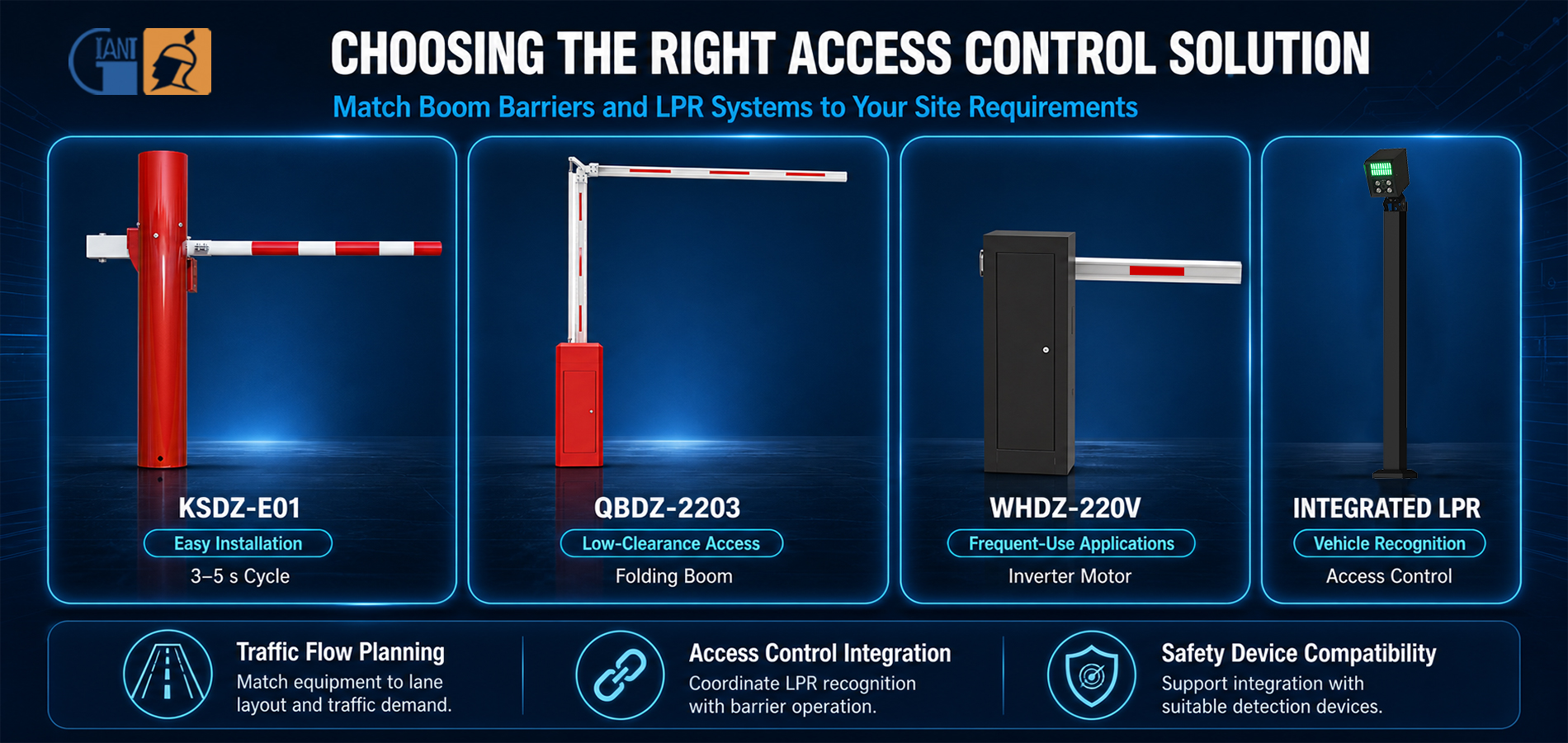
KSDZ-E01 Easy-Installation Boom Barrier
Designed for straightforward deployment, the KSDZ-E01 offers an opening and closing cycle of approximately 3–5 seconds, adjustable automatic closing time, reversible boom orientation, and optional battery backup. It supports integration with photocells, vehicle detectors, and warning lights. It is suitable for commercial parking lots, business parks, and other controlled vehicle entrances.
QBDZ-2203 Folding-Arm Boom Barrier
The QBDZ-2203 uses a folding boom to accommodate entrances with limited overhead clearance, such as underground parking garages and covered vehicle access points. Its low-noise operation and dual-voltage compatibility support different installation requirements. Confirm the folded boom's clearance against the actual ceiling height before installation.
WHDZ-220V Springless Boom Barrier
Featuring an Inverter Motor, the WHDZ-220V is designed for demanding, frequent-use applications. It offers IP55 protection, an operating temperature range of -20°C to +60°C, straight or fence-style boom options, and boom lengths from 2.5 to 6 m. Overcurrent rebound and overheat protection support dependable operation in industrial parks, logistics facilities, and wider vehicle lanes. IoT-based remote configuration is also available.
Conclusion
Successful boom barrier installation depends on more than choosing the right equipment. Traffic planning, accurate positioning, compatible safety devices, and compliance with local requirements all contribute to a reliable automatic boom barrier system. Assess the site first, then select a barrier that matches its operating conditions.
 37 Sunshine Road, Photoelectric Information Industrial Park, Nan'an, Fujian, China
© Copyright: 2022 Giant Alarm System Co.,Ltd All Rights Reserved.

IPv6 network supported


