
 English
 简体中文
简体中文  繁体中文
繁体中文 


How Often Should a Sliding Gate Opener Be Maintained?
How Often Should a Sliding Gate Opener Be Maintained?
An automatic gate may open and close hundreds of times a month, placing continuous demands on the motor, gearbox, rack and pinion system, and gate hardware. Regular maintenance helps prevent unexpected downtime, reduce repair costs, and keep the entire gate system operating safely.
So, how often should a sliding gate operator be maintained? The answer depends mainly on operating frequency, gate condition, and the installation environment.
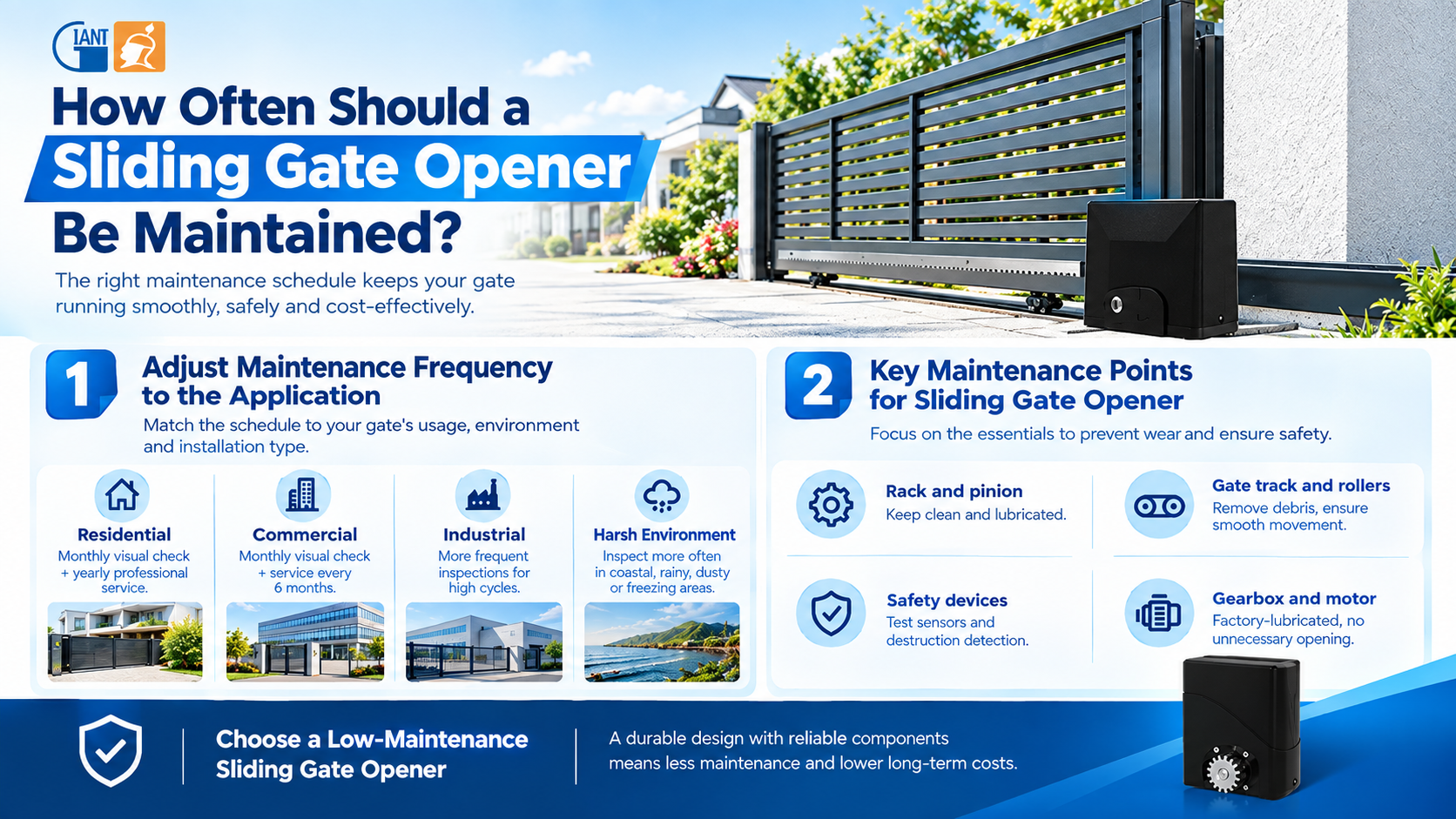
1. Adjust Maintenance Frequency to the Application
There is no single maintenance schedule for every automatic sliding gate operator.
For residential sliding gates, where daily cycles are relatively low, homeowners can perform basic visual checks monthly, while a professional inspection at least once a year is a practical baseline.
For commercial properties, apartment complexes, and office facilities, gates typically experience more frequent operation. Monthly visual checks and professional servicing every six months can help identify wear before it affects daily access.
For industrial facilities, warehouses, and logistics sites, high cycle counts can accelerate mechanical wear. More frequent professional inspections may be necessary, particularly for high-traffic entrances.
Environmental conditions should also be considered. Coastal areas, heavy rain, dust, mud, and freezing conditions can increase wear and corrosion, making more frequent inspection advisable.
2. Key Maintenance Points for Sliding Gate Opener
For an outdoor rack and pinion sliding gate operator, maintenance should focus on several critical areas.
Rack and pinion: Keep the drive area clean and free from dirt, leaves, and debris. Use a lubricant recommended by the operator manufacturer rather than applying unsuitable oils or excessive grease.
Gate track and rollers: Keep the travel path clean and check that the gate moves smoothly by hand when safely disconnected. Mechanical resistance can place unnecessary load on the operator.
Safety devices: Test laser sensor, obstruction detection. Safety devices are essential for preventing the gate from closing when an obstruction is detected.
Gearbox and motor: Many modern operators use enclosed, factory-lubricated gearboxes. These should not be opened unnecessarily; professional technicians should assess internal components when servicing is required.
3. Choosing a Low-Maintenance Gate Opener
A good maintenance plan is important, but operator design also affects long-term service requirements.
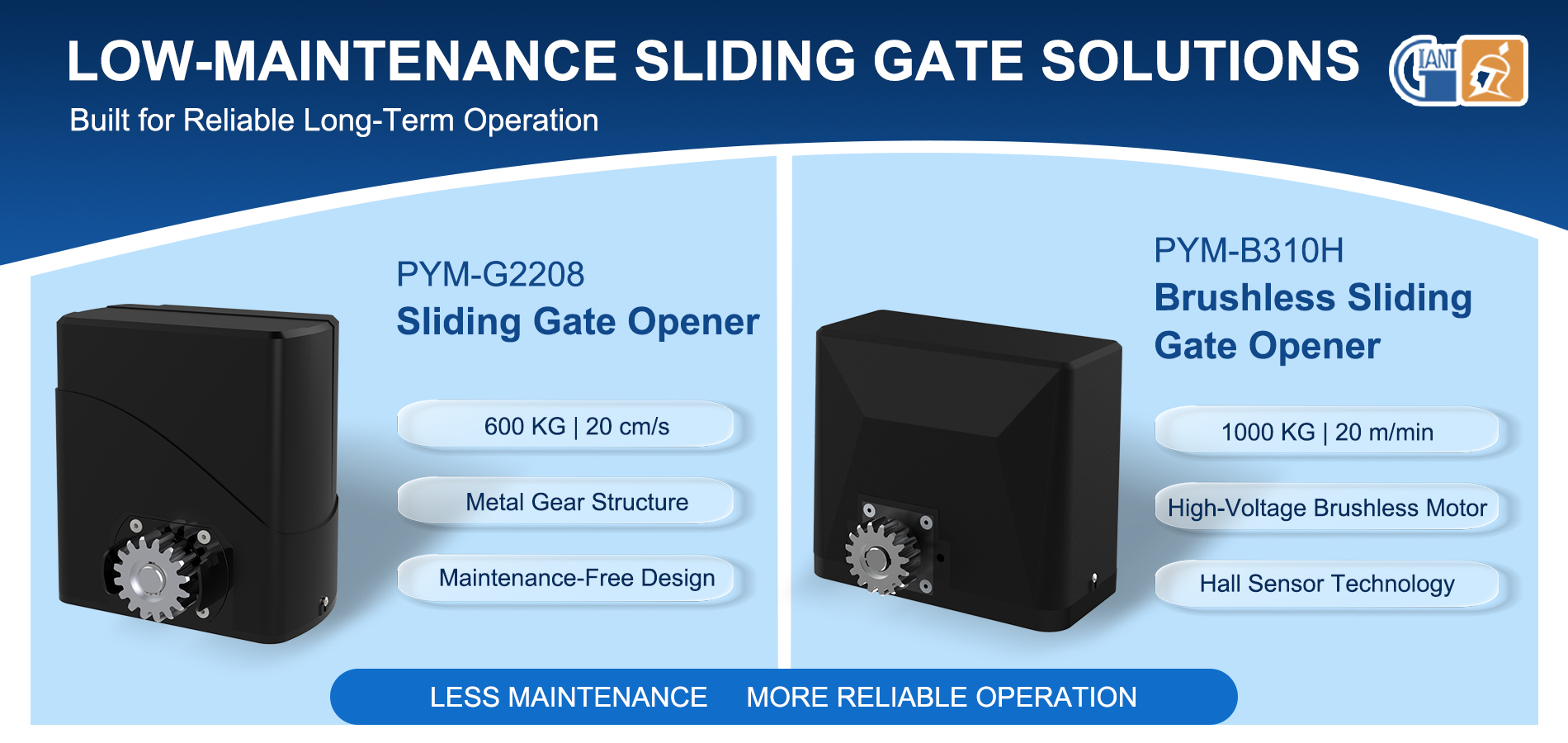
The JUJIANG GIANT PYM-G2208 sliding gate operator uses a rack-and-pinion drive system with a metal gear structure and integrated control board. Features including obstruction reversal, limit control, overcurrent protection, and automatic closing support reliable operation for residential and light industrial applications.
For higher-performance applications, the PYM-B310H sliding gate opener uses a high-voltage brushless motor, eliminating conventional carbon-brush wear. Its Hall sensor provides accurate rotor-position and speed detection, while control-board status monitoring helps identify potential operating issues earlier.
For installers and project buyers, selecting a reliable sliding gate opener supplier can reduce maintenance requirements, service visits, and long-term operating costs.
Conclusion
The ideal sliding gate operator maintenance schedule should be based on cycle frequency, environmental conditions, and the manufacturer's recommendations. Regular cleaning, mechanical inspection, safety testing, and professional servicing can help extend system life and maintain reliable gate access.
For demanding applications, choosing a durable automatic sliding gate operator with brushless motor technology and integrated safety features can further reduce long-term maintenance requirements.
 37 Sunshine Road, Photoelectric Information Industrial Park, Nan'an, Fujian, China
© Copyright: 2022 Giant Alarm System Co.,Ltd All Rights Reserved.

IPv6 network supported


