
 English
 简体中文
简体中文  繁体中文
繁体中文 


Can a Bottom-Hung Window Be Fitted with an Electric Window Opener?
Can a Bottom-Hung Window Be Fitted with an Electric Window Opener?
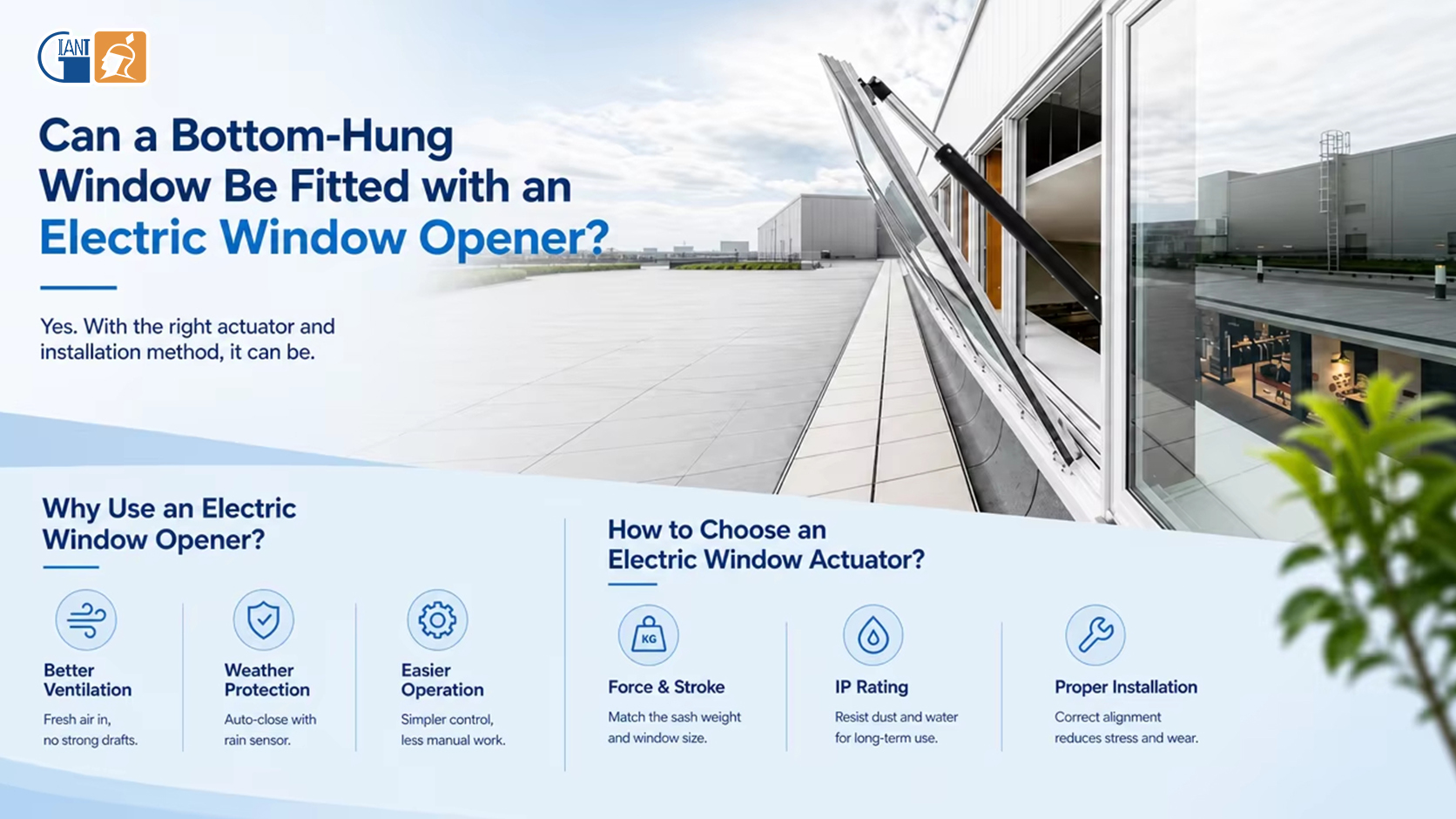
As building automation becomes increasingly common, electric window openers are being used in a wider range of commercial and residential projects. One question frequently raised by window installers and project professionals is: Can a bottom-hung window be fitted with an electric window opener?
The answer is yes. With the right actuator and installation method, a bottom-hung window can be automated to improve ventilation, simplify daily operation and provide more responsive control over the building environment.
Why Use an Electric Window Opener for Bottom-Hung Windows?
A bottom-hung window is hinged along its lower edge, allowing the upper part of the sash to tilt inward. This opening configuration can provide comfortable natural ventilation by directing airflow into the room without creating a strong direct draft.
However, the inward-opening design also requires attention to weather protection. During unexpected rainfall, an open window can allow water into the building if it is not closed in time. Windows installed at a high level can also be difficult to operate manually, particularly in commercial buildings or larger properties where multiple windows need to be managed.
An automatic window opener can address these challenges. When paired with a rain sensor, the system can automatically close the window when rainfall is detected, helping protect interior spaces while reducing the need for manual inspection.
How to Choose an Electric Window Actuator?
For bottom-hung windows, a linear window actuator with a push-rod mechanism is a practical option, particularly where stable operation and sufficient opening force are required.
The first consideration is force and stroke. The actuator must provide enough force to overcome the sash weight and operating resistance, while the stroke determines how far the window can open. Wind load and friction should also be considered during selection to ensure reliable operation.
Protection rating is another important factor for windows exposed to outdoor conditions. A higher IP rating helps protect the actuator from dust and water and supports reliable long-term operation.
Installation is equally important. The actuator should be correctly aligned with the window frame and sash so that the pushing force is applied in the intended direction. Proper alignment helps reduce unnecessary mechanical stress and wear.
JUJIANG GIANT Solutions for Bottom-Hung Windows
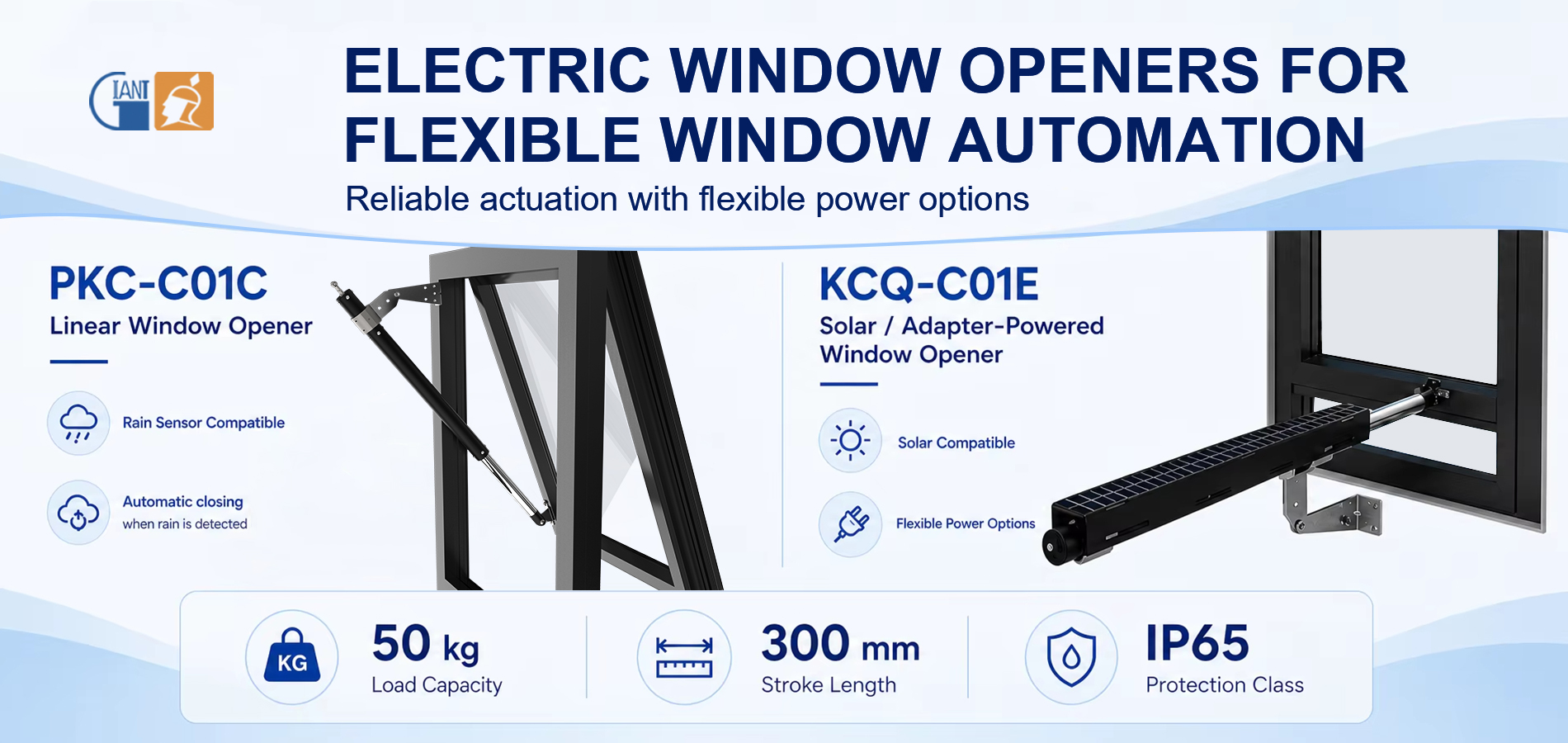
The JUJIANG GIANT PKC-C01C linear window opener is designed for applications including top-hung and bottom-hung windows. Driven by a 12V DC motor, it supports window sashes up to 50 kg, with a maximum window width of 1.5 m and a 300 mm stroke. Its IP65 protection rating makes it suitable for demanding indoor and outdoor applications.
For added protection, the actuator features overcurrent detection. When an obstruction is encountered during operation, the system can stop automatically. It can also work with a rain sensor to trigger automatic window closing when rainfall is detected.
For projects where conventional wiring is difficult, the KCQ-C01E solar/adapter-powered electric window opener offers greater installation flexibility. The solar-powered version can be considered for retrofit projects, high-level windows and locations where running new power cables would be difficult, while the adapter-powered version provides a conventional continuous power solution.
With appropriate actuator selection and installation, electric window openers for bottom-hung windows can provide a practical solution for automated ventilation, weather protection and more convenient window management.
 37 Sunshine Road, Photoelectric Information Industrial Park, Nan'an, Fujian, China
© Copyright: 2022 Giant Alarm System Co.,Ltd All Rights Reserved.

IPv6 network supported


